Inspire360 Global Fitness Newsletter, May Edition, Issue 39
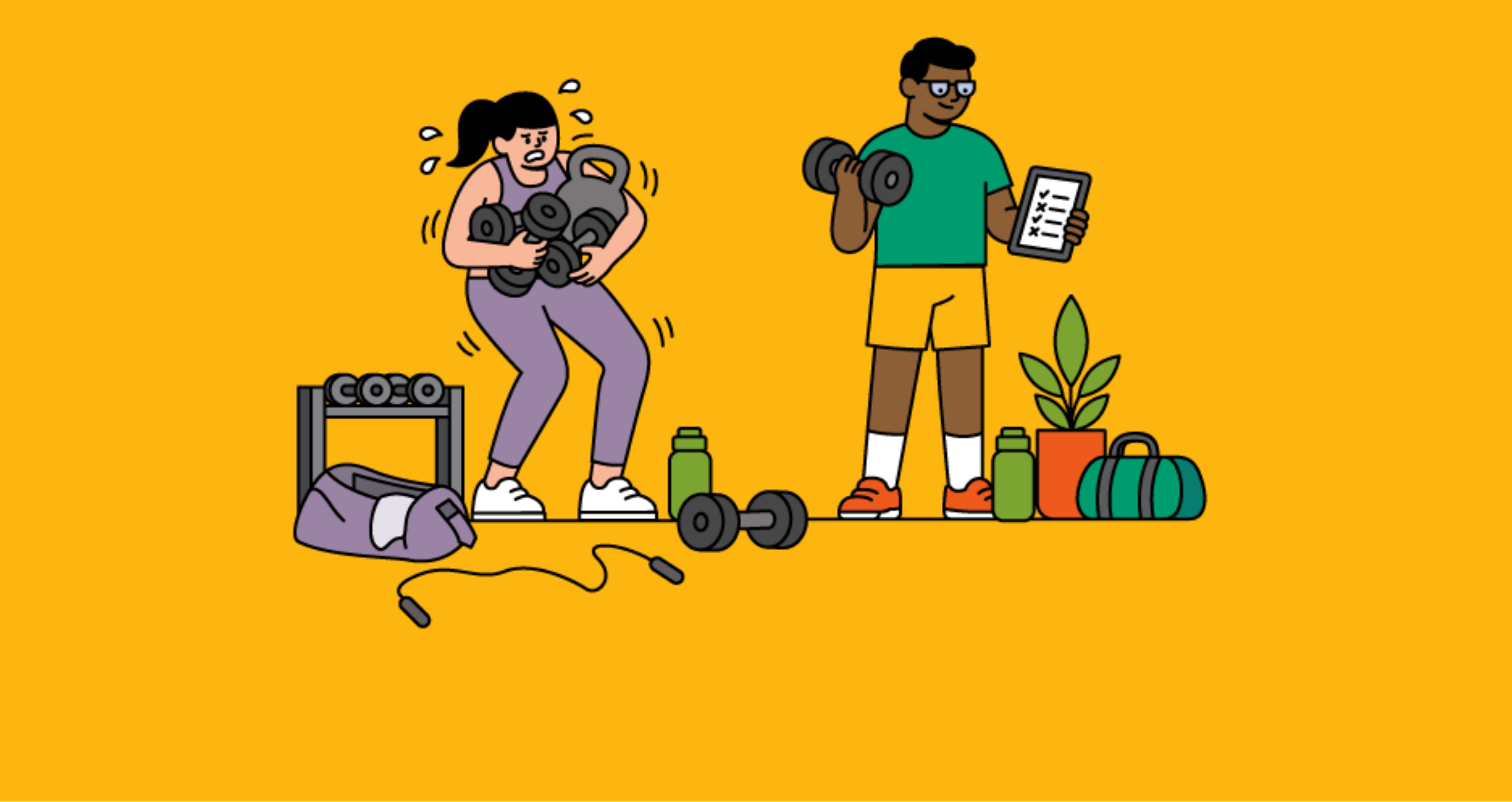
For decades, the fitness industry has been focused on one big idea: more is better.
Go big or go home. Your smoothie needs BCAAs and adaptogens and collagen peptides. Optimize your workout, your tracking, your recovery routine, your sleep. Do the most. When the going gets tough, keep going. Train harder. Push past the limit. It’s worth it!
But is more… really better?
Let’s analyze how this plays out, specifically through the lens of training… because there’s some alarming data showing we might need to pump the brakes a bit. About half of new gym members quit within their first six months.
The "always go hard" model can deliver results, but most people can't sustain it long enough to see them.
And the industry, finally, is catching on.
The Big Shift
The American College of Sports Medicine's 2026 Worldwide Fitness Trends report, now in its 20th year, paints a clear picture of where the field is moving, thanks to two decades of data.
Functional fitness training has appeared in the top 20 every year since 2007. Balance, flow, and core strength now ranks number 5, with participation in yoga, Pilates, and mobility-focused classes up 27% between 2022 and 2024.
Meanwhile, HIIT — which dominated the rankings from 2018 to 2020 — has dropped to number 12 in 2026, down from number 6 the year prior. While HIIT feels efficient, time-conscious, and powerful, it can also feel a bit aggressive (and even intimidating) to some clients.
The data tracks with what consumers are actually saying they want: feel better, move better, live longer. Compared with past marketing centered on beach bodies and looking a certain way by summer, this is a marked difference in consumer psychology.
That shift is showing up in what people are spending money on, too. The global fitness recovery services market is projected to more than triple by 2035 (from $8.3B to $26.8B), and personalized coaching now accounts for roughly 47% of global health club revenue — both signals that demand for personalization, recovery, and sustainable programming is reshaping how the industry makes money.
Intensity vs. Results
More intensity doesn't always reliably mean better results, especially long-term. What it does mean, with surprising consistency, is more risk.
A systematic review on overtraining syndrome found that excessive training without adequate recovery is linked to measurable hormonal disruption, including blunted ACTH and growth hormone responses, with cortisol and catecholamine patterns also affected. Translation: the body under chronic over-stress stops responding the way it's supposed to. Performance flatlines. Recovery stalls. And the very results clients signed up for become harder to access.
The injury data points the same direction. High-intensity, high-volume programming carries a meaningfully elevated risk of musculoskeletal injury, and an injured client is rarely a returning one. Sidelining a member doesn't just cost them a few sessions — it often costs the gym the relationship.
There's also the adherence problem. When training feels punishing, people stop showing up. And when they stop showing up, the program — however well-designed — becomes irrelevant.
Add it up, and a pattern emerges: pushing harder, more often than not, shortens a client's training lifespan. The very thing meant to accelerate results ends up cutting them short.
The Burnout Problem
The "always go hard" method often backfires, and while there’s a substantial body of research that explains why, it’s obvious: people don't come back to workouts that feel bad.
A decade-long review of the research on exercise intensity and how people feel during it found a consistent pattern: once the intensity exceeds a person's ventilatory or lactate threshold (the point where exercise becomes unsustainably hard), pleasure drops sharply.
We know this. But that drop matters, because follow-up research directly tied lower in-the-moment pleasure to lower long-term adherence.
In plain terms: when training feels punishing, people stop showing up.
This is the part of the burnout equation the industry has historically waved away. Mental burnout, physical fatigue, and a slow erosion of motivation are predictable outcomes of programming pitched above the threshold of what most clients can actually tolerate.
And half of new gym members quit within their first six months, which suggests a lot of programs are getting that calibration wrong.
Programming that prioritizes consistency over intensity keeps people in the game. Think: moderate efforts performed regularly, with adequate recovery built in.
And being in the game is the prerequisite for every other outcome we care about.
Longevity & Healthspan
The longevity conversation has moved from biohacker fringe to mainstream programming, and it's bringing a new vocabulary with it: joint health, mobility, muscle preservation, and metabolic resilience. The true markers, the actual mechanics of aging well.
This is especially relevant given the aging population — adults over 65 now visit gyms and studios more often than any other age group, per ACSM's 2026 data — and the rising number of clients on GLP-1 medications.
Muscle preservation, in particular, has become urgent in the GLP-1 era. According to our Q1 2026 GLP-1 Club Intelligence Report, up to 50% of weight lost on GLP-1 medications can be lean mass without resistance training — a statistic that's reframing how the industry talks about strength work entirely. It's no longer just about aesthetics or performance. It's about preserving the tissue that keeps people functional, mobile, and metabolically healthy as they age.
Which means strength training, recovery, and consistency aren't competing priorities. They're the through-line. The clubs and studios that build programming around all three are the ones positioning themselves for where the industry is actually going.
The Takeaway
The smartest programming in 2026 isn't the hardest. It's the most sustainable. The clients who stay are the ones who feel better at month six than they did at month one — and who can imagine still showing up at month sixty.
The data exists to prove this: a randomized controlled trial shows self-paced exercise (participants choose their own intensity) produces better adherence than prescribed moderate-intensity programs, with the effect especially pronounced in adults over 50.
And the “less is more” argument extends beyond adherence into outcomes. A study published in Medicine & Science in Sports & Exercise found that resistance-trained men performing roughly 39 minutes of strength training per week saw strength gains equal to those of participants training five times that volume.
The implication is hard to ignore: a fraction of the time investment, with the same payoff.
So if your programming is still selling intensity as the headline, it might be time to update the pitch.
—-------------------------------------------------------------------------------------
Inspire360 Club Bulletin
We recently launched Inspire360 Club, a game-changing platform built to redefine health club education and unite the industry for the first time under one comprehensive, modern learning ecosystem. #GameChanged. Book a demo of Inspire360 Club at: www.inspire360.com/club
What's New This Month:
.jpg)
Inspire360 and the Institute of Motion have partnered to bring the AHHPS Level 1 course, developed by Michol Dalcourt, directly into the Inspire360 Club platform. This integration gives trainers access to a practical, real-world system for understanding and coaching movement, delivering tools that improve assessments, elevate coaching quality, and translate seamlessly to the gym floor.
—-------------------------------------------------------------------------------------
In Case You Missed it: Industry Report on GLP-1 Programs
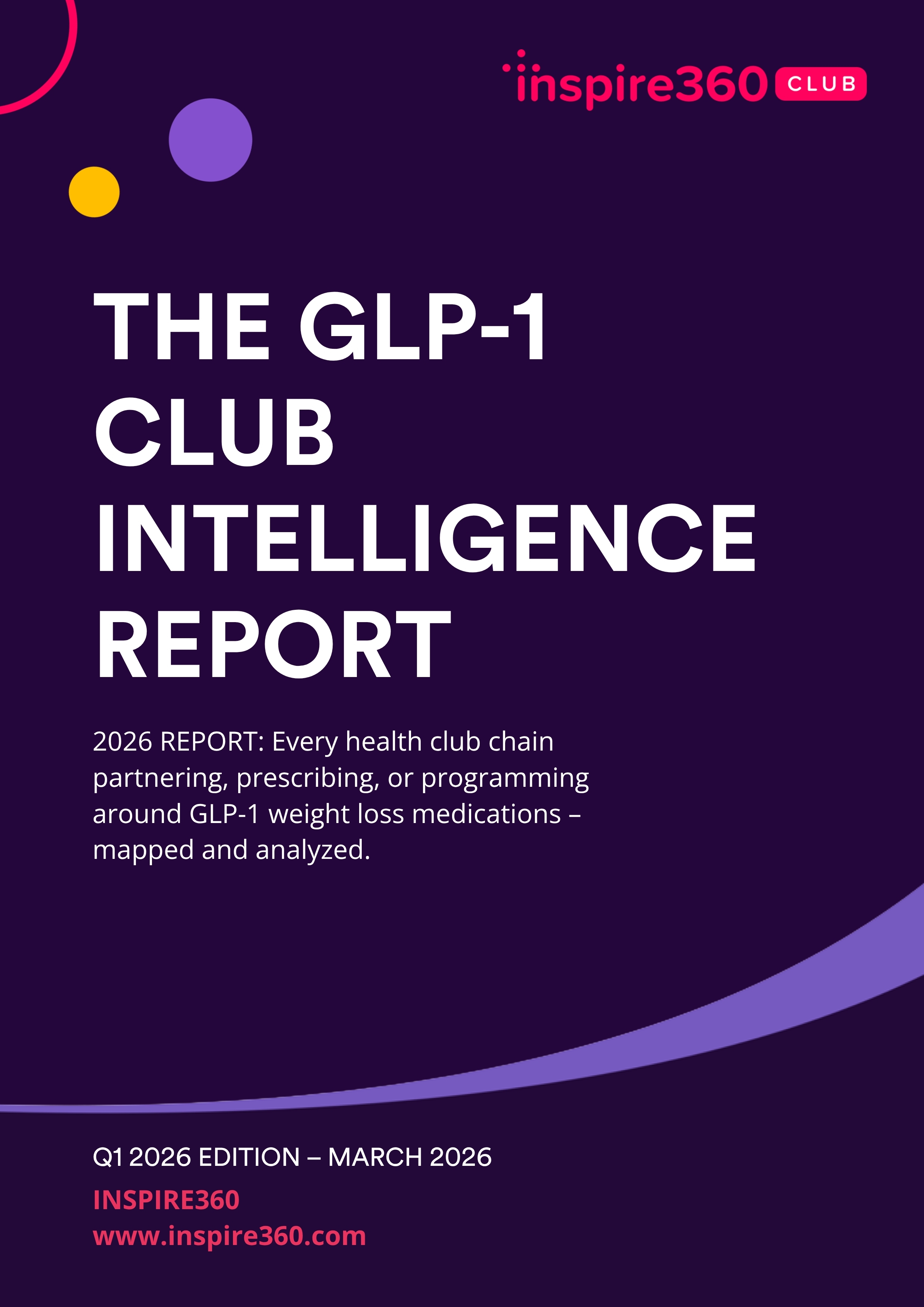
Our updated Q1 2026 Intelligence Report is live, mapping out how 17 major gym chains and 10 top solution providers are successfully integrating GLP-1 programs into their clubs. We’ve broken down the essential playbooks for supporting these members, including how to bridge the "trainer readiness gap" to ensure your staff can safely manage the unique resistance training and nutrition needs of this growing population.
—-------------------------------------------------------------------------------------
Industry Happenings:
Upcoming Events:
- Sibec, May 18-21, 2026, San Diego, California
- Miami International Fitness Expo, May 23, 2026, Miami, Florida
- Florida Mania, May 29-31, 2026, Orlando, Florida
- Summit in the Sun, June 25-28, 2026, Litchfield Park, Arizona
- Annual Wellness Summit, July 27-30, 2026, Nashville, Tennessee
- canfitpro GLOBAL, August 14-15, 2026, Toronto, Canada
- Fit Expo, August 29-30, 2026, Anaheim, California
—-------------------------------------------------------------------------------------
Upcoming Workshops in May & June:
- 20+ workshops from Peak Pilates
- 20 workshops from Spinning®
- 20+ workshops from TRX®
- 18 workshops from ART
- 9 workshops from CFSC
- 7 workshops from Oxygen Advantage
- 5 workshops from Exos
- 3 workshops from Gray Institute
- 3 workshops from Power Plate
—------------------------------------------------
Industry News:
- Life Time launches HYBRID XT to fuel rise of hybrid fitness competitions.
- Gym membership hits record high.
- Bruce Edwards returns to CrossFit in CEO role.
- Garmin posts upbeat quarterly results as demand for premium wearables holds up.
- New study shows testosterone therapy in women improves energy and mood.
- Spotify launched a fitness vertical.
—----------------------------------------------------
Thanks for Reading!
This newsletter was brought to you by Kathie Davis, Peter Davis, Ravi Sharma, Dominique Astorino, and the Inspire360 team.
—----------------------------------------------------
A Note from Peter & Kathie
The industry is changing rapidly, and we are here to help you sift through all the noise and get to the good stuff. Every month, we'll bring you trending topics and the inside scoop that we believe is paramount for fitness professionals to know.
Keep Inspiring,
Peter & Kathie Davis
Want to get this delivered straight to your inbox? Sign up to receive the Inspire360 Global Fitness Newsletter here.